Spray Foam Insulation Cost Guide: What It Really Costs to Get It Done Right
Every spray foam cost guide on the internet gives you the same table: attic, $X per square foot; walls, $Y per square foot; crawl space, $Z per square foot. Those numbers are real, and we're going to give them to you too. But if all you take away is a price-per-square-foot range, you're set up to make the wrong decision the first time a contractor undercuts the field by 30%.
Here's what almost nobody explains: spray foam pricing isn't really a material cost problem. Open-cell and closed-cell foam themselves are a relatively small line item in a job's total cost. The real spread between a $3,200 attic quote and a $5,800 attic quote for the identical square footage almost always comes down to what's standing behind the spray gun — a certified applicator running calibrated mix-ratio equipment, holding a manufacturer-backed warranty, and building QC time into the schedule, versus a crew racing to spray as many jobs as possible in a day.
This guide walks through the real national cost ranges for every major spray foam project type, then breaks down exactly which cost drivers are tied to installer quality — so you can read a quote and know whether the price reflects a properly built job or a shortcut you'll pay for later.
The National Cost Ranges (What You'll Actually See on a Quote)
These figures reflect typical installed pricing across the U.S. for professionally applied spray polyurethane foam. Regional labor markets, home access, and existing conditions all move the number, but this is the real-world range a legitimate contractor should be quoting from.
Overall Installed Cost Per Square Foot
- Spray foam insulation, all types blended: $1.50 to $5.00 per square foot installed
- Open-cell spray foam: $1.50 to $3.50 per square foot installed
- Closed-cell spray foam: $3.00 to $5.00 per square foot installed
- The gap between open-cell and closed-cell isn't arbitrary markup — closed-cell uses a denser, more expensive chemical formulation and requires tighter process control to apply correctly, which we'll cover below
Attic Insulation
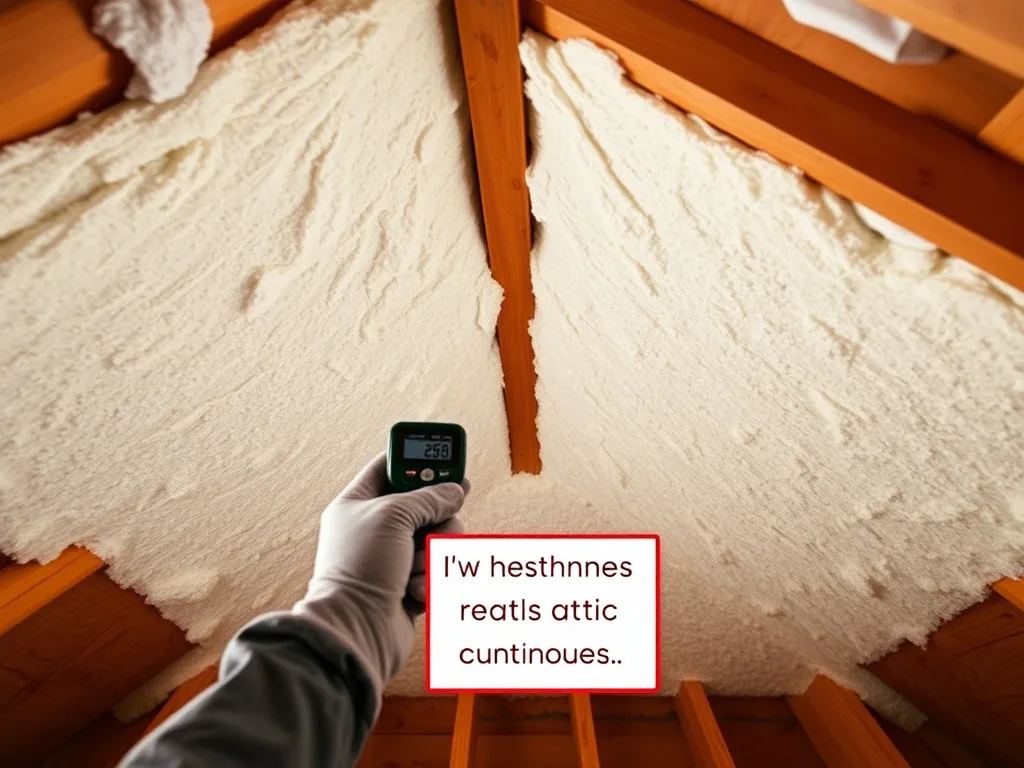
A typical 1,000 square foot attic runs $3,000 to $5,000 with open-cell foam, or $4,500 to $7,000 with closed-cell foam. Attics are usually priced by roofline square footage rather than floor square footage, since a certified crew is spraying the underside of the roof deck (unvented) or the attic floor (vented) — and an irregular roofline with lots of hips, valleys, and dormers takes meaningfully more labor time to get consistent coverage than a simple gable.
Wall Insulation — New Construction and Retrofit
New-construction open-cavity wall spraying typically falls in the same $1.50 to $5.00 per square foot range depending on foam type, since the crew has full access to open studs. No-demo retrofit wall injection — drilling small access holes into finished walls and injecting foam behind the drywall — commonly runs higher per square foot than open-cavity work in the same house, because it demands slower, more deliberate technique: correct drill spacing, injection pressure control, and a way to verify full cavity fill without being able to see inside the wall. A retrofit injection quote that matches new-construction pricing dollar-for-dollar is worth asking about directly.
Crawl Space Insulation and Encapsulation
Crawl space spray foam costs vary more than any other project type because the starting condition of the space matters enormously — moisture levels, existing vapor barrier, height clearance, and access all affect labor time. Expect quotes in the same $1.50 to $5.00 per square foot band for the foam application itself, with encapsulation add-ons (vapor barrier, sealing vents, sometimes a dehumidifier) priced separately. A contractor who skips a moisture reading before quoting a crawl space job is skipping the single most important variable in that price.
New Construction (Whole-Building)
Whole-building new-construction jobs are typically quoted per square foot of conditioned space or per unit for multi-unit builds, landing in the same $1.50 to $5.00 per square foot range scaled to total envelope area. For builders, the number that matters more than the unit price is consistency across every unit on the site — a documented, repeatable process is what keeps a 40-unit project from having 3 units fail an IECC inspection because one crew member mixed the ratio differently than the others.
Open-Cell vs. Closed-Cell: Why the Price Gap Is a Process Gap, Not Just a Material Gap
Open-cell foam (roughly R-3.5 to R-3.7 per inch) is a softer, more forgiving foam to spray — it expands more, fills irregular cavities more easily, and is more tolerant of a slightly-off pass thickness. Closed-cell foam (roughly R-6 to R-7 per inch) is denser, rigid, and far less forgiving. Get the mix ratio or pass thickness wrong on closed-cell and you don't get a soft spot you can compress by hand — you get brittleness, poor adhesion, or a foam that never fully cures, and none of it is visible from the surface once the job is closed up.
That's the real reason closed-cell commands a higher price per square foot than open-cell — it isn't only that the chemical components cost more (though they do). It's that closed-cell demands calibrated proportioning equipment, tighter temperature and humidity control on the day of application, and an installer who has actually been trained on closed-cell's narrower error margin. A crew charging closed-cell prices while applying open-cell technique is the single most common way a homeowner ends up with a $5,000 job that performs like a $3,000 job.
What a Properly Built Quote Actually Pays For
Foam Masters is the standard-of-craft spray foam network — every crew is certified, every job is warranty-backed, and every install is quality-checked, not just quoted. That standard isn't free, and understanding what it costs is the key to reading any quote correctly. Here are the four line items a legitimate bid is built on, whether or not the contractor spells them out separately.
1. Certified Crew Training and Labor Time
Manufacturer and industry certification programs teach applicators the specifics of the exact foam system they're spraying — proper substrate temperature, humidity thresholds, pass thickness limits, and how to read early warning signs of a bad reaction (scorching, poor rise, off-ratio smell) before they seal a wall or roof deck closed. That training has a cost, and a certified applicator's time on the job is priced accordingly. A crew paid to move fast between jobs, with no certification requirement, will always be able to underprice a certified crew on labor — because they're not accounting for the same level of care per square foot.
2. Calibrated Mix-Ratio Equipment and Maintenance
Spray foam is a two-component chemical reaction — an A-side and a B-side that have to combine in a precise 1:1 ratio, at the right temperature and pressure, to cure correctly. That happens through a proportioner rig that has to be calibrated regularly and maintained between jobs. A rig running slightly off-ratio doesn't announce itself; it just produces foam that looks fine on day one and fails months or years later as brittleness, shrinkage, or a lingering odor. Proper equipment, calibration checks, and preventive maintenance are a real, ongoing cost that shows up in a legitimate quote — and are the first thing a corner-cutting operation skips, because a customer can't see a proportioner rig's maintenance log by looking at a finished wall.
3. Workmanship Warranty Coverage
Spray foam has two separate warranties: the manufacturer's material warranty (covering the foam chemistry itself) and the installer's workmanship warranty (covering the application — did the crew achieve full cavity fill, correct thickness, and proper adhesion). A contractor who stands behind a real workmanship warranty is pricing in the cost of coming back to fix a problem at their own expense, which means they have every incentive to get it right the first time. A bid with no workmanship warranty, or one that only vaguely gestures at the manufacturer's material warranty, is a bid with no built-in cost for making mistakes right — which usually means it was priced assuming there won't be any callbacks to pay for.
4. Quality Control Time Built Into the Schedule
A quality install includes checkpoints that take real time and don't show up as a separate invoice line: a substrate and moisture check before spraying starts, in-process monitoring of lift thickness as the foam goes up, and a post-install verification pass to confirm coverage and thickness meet spec. Skipping those checkpoints doesn't change the price of the foam itself, but it does let a crew spray more square footage per day — which is exactly how a bargain bid gets built. When you see a quote that's dramatically faster to schedule and dramatically cheaper than everyone else, QC time is usually the first thing that got cut to make the numbers work.
Reading Between the Lines of a Lowball Bid
A bid that comes in 30-40% below the rest of the field for the same square footage and the same foam type isn't automatically a scam, but it is automatically worth a direct question: what's different about how you're pricing this? The honest answers are usually mundane — lower overhead, a slow week, a smaller crew willing to work for less margin. The dishonest answers show up as evasiveness on a short list of specific questions.
- Ask which manufacturer's foam system they're certified on, and ask for documentation — not just a verbal claim of experience
- Ask whether the quote includes a written workmanship warranty separate from the manufacturer's material warranty, and get the term length in writing
- Ask how they verify lift thickness and full cavity fill during the job, not just before or after
- Ask whether the crew on your job is the same crew whose certification they're citing, or a subcontracted team
- Ask what happens, in writing, if a post-install inspection finds a gap or a thin spot
A contractor who prices at or near the rest of the field and answers all five questions specifically is pricing in the cost of doing the job right. A contractor who prices well below the field and gets vague on two or more of these questions is very likely pricing in the cost of skipping something — and spray foam is exactly the kind of product where the thing that got skipped is invisible until it fails.
Why the Cheapest Bid Often Costs More in the End
Because spray foam is sealed behind drywall, roof decking, or a crawl space vapor barrier the day it's sprayed, a bad install doesn't get caught the way a bad paint job or a crooked fence does. Off-ratio foam, thin spots, and voids in a cavity typically surface months or years later — as a spike in energy bills that never should have happened, a musty smell from moisture trapped behind an incomplete seal, or a resale inspection that flags undocumented, unverifiable work. At that point, the cost to fix it isn't the difference between the cheap bid and the properly priced one — it's the full cost of removal and re-installation, on top of whatever damage the bad install caused in the meantime.
This is also the root of a searcher anxiety that comes up constantly around spray foam: stories about spray foam causing problems at resale or making a home harder to appraise. Almost every documented case of that problem traces back to an undocumented, uncertified install — wrong foam type for the application, no paperwork proving what was sprayed or by whom, no way for an inspector or appraiser to verify the work. That's not a spray foam problem. That's a certification and documentation problem, and it's exactly what a legitimate quote's higher price is protecting you against.
How to Compare Quotes Apples-to-Apples
Once you have two or three quotes in hand, resist the urge to sort by price alone. Line them up against these factors first, and you'll usually find the price differences make a lot more sense.
- Foam type specified by name (open-cell vs. closed-cell) and R-value per inch, not just 'spray foam'
- Square footage and area measured the same way across all quotes (roofline vs. floor area for attics especially)
- Certification named and verifiable, with the actual crew assigned to your job
- Workmanship warranty term length and what it specifically covers, in writing
- Whether QC checkpoints (moisture check, thickness verification) are mentioned at all
- Timeline — a quote that can start same-week when everyone else is booked out may reflect a crew moving faster than the job should allow
A properly built quote should make it easy to answer all six of these. If a bid leaves most of them blank or vague, that's more informative than the number at the bottom of the page.
The Bottom Line
The national cost ranges are real: $1.50 to $5.00 per square foot installed overall, with open-cell running $1.50 to $3.50 and closed-cell running $3.00 to $5.00, and a typical 1,000 square foot attic landing between $3,000 and $7,000 depending on foam type. But those numbers only tell you what spray foam costs on average — they don't tell you what a specific bid is actually paying for. The honest answer to 'why do quotes vary so much' is almost never the foam itself. It's whether the price includes a certified crew, calibrated equipment, a real workmanship warranty, and QC time — or whether one or more of those got quietly left out to hit a lower number.
Foam Masters connects you with certified installers nationwide who price their quotes around doing the job right the first time — documented certification, calibrated equipment, a workmanship warranty in writing, and QC checkpoints built into the schedule, not skipped to shave the bid. Call 844-967-5247 or email josh@contractorschoiceagency.com to get a quote that shows its work.
Frequently asked questions
The foam itself is a relatively small part of the total cost. Most of the variation between quotes comes down to installer quality factors: whether the crew is certified on the specific foam system, whether the proportioning equipment is properly calibrated and maintained, whether a real workmanship warranty is included, and whether quality-control checkpoints (moisture checks, lift-thickness monitoring, post-install verification) are built into the job. Two quotes for the identical attic can differ by thousands of dollars because one includes all of that and the other doesn't.
Nationally, installed spray foam typically runs $1.50 to $5.00 per square foot. Open-cell foam runs $1.50 to $3.50 per square foot, and closed-cell foam runs $3.00 to $5.00 per square foot. Actual pricing depends on foam type, project type, region, and access conditions.
A typical 1,000 square foot attic costs $3,000 to $5,000 with open-cell foam or $4,500 to $7,000 with closed-cell foam. Attics with complex rooflines (multiple hips, valleys, or dormers) generally cost more than a simple gable roof of the same square footage because they take longer to spray consistently.
Closed-cell foam uses denser, costlier chemical components and delivers a higher R-value per inch (R-6 to R-7 versus R-3.5 to R-3.7 for open-cell). It's also far less forgiving to apply correctly — mix-ratio or pass-thickness errors that open-cell tolerates can show up in closed-cell as brittleness or poor adhesion. That narrower margin for error requires more calibrated equipment and more specifically trained installers, which is reflected in the price.
Not by itself. A bid significantly below the rest of the field for the same foam type and square footage is worth a direct conversation, not an automatic red flag or an automatic yes. Ask specifically about certification, workmanship warranty terms, and how lift thickness and cavity fill are verified during the job. A legitimate low price usually comes with clear answers to all three; a corner-cutting price usually comes with vague ones.
There are two separate warranties: the manufacturer's material warranty covering the foam chemistry, and the installer's workmanship warranty covering the application itself. A contractor offering a real workmanship warranty in writing is pricing in the cost of standing behind their own work, which is one reason properly warrantied quotes tend to cost more than bids with no workmanship coverage at all.
Almost all documented resale or appraisal friction around spray foam traces back to bad installs from uncertified crews — the wrong foam type used for the application, no documentation of what was sprayed or by whom, and no way for an inspector to verify the work after the fact. It's a certification and paperwork problem, not a defect in spray foam itself. A properly certified, documented install doesn't create that friction.
A complete quote should specify the exact foam type (open-cell or closed-cell) and R-value per inch, the square footage and how it was measured, the crew's certification, a written workmanship warranty with a defined term, and some description of quality-control steps like a pre-spray moisture check and a post-install thickness or coverage verification.
Ready for a free quote?
Tell us about your project and we'll connect you with a certified crew in our network — a clear quote, a written scope, and a workmanship warranty in writing.