Crawl Space Spray Foam Insulation & Encapsulation
Closed-cell spray foam applied to crawl space walls and rim joists, backed by pre-spray moisture readings, verified wall coverage, and full encapsulation detailing — because a crawl space is the one job type where nobody checks the work again after the crew packs up.
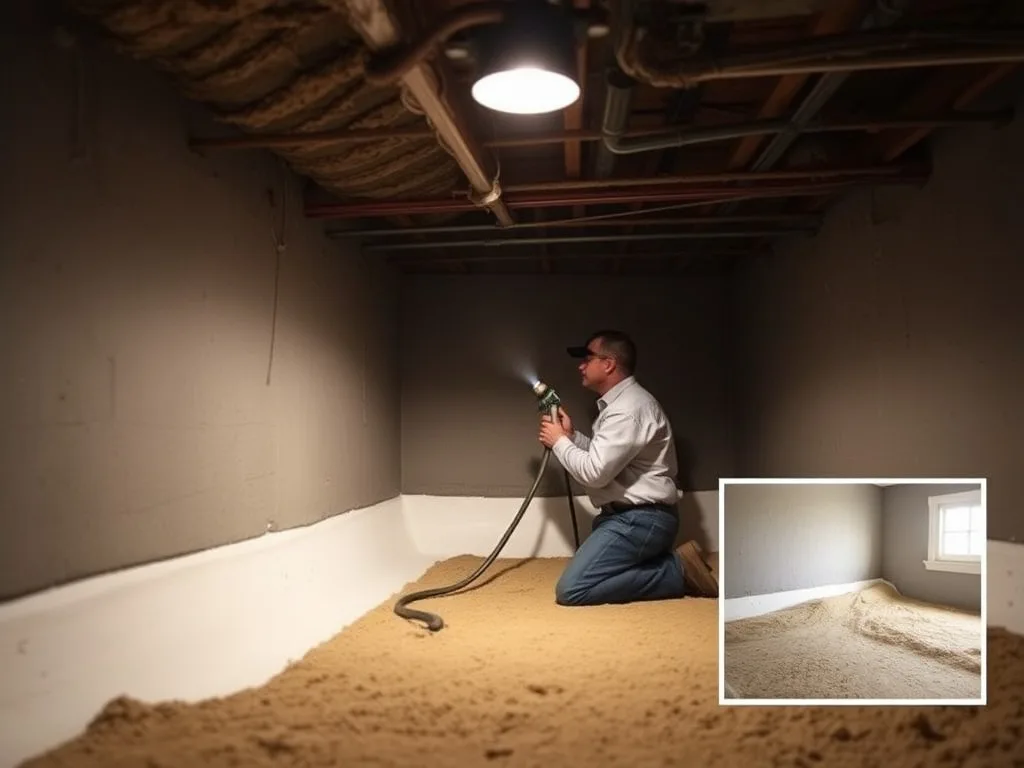
A crawl space is the one part of a home almost nobody looks at again once the job is done. There's no drywall to pull back, no finished room to walk through, and no reason for a homeowner to crawl under the house on a random Tuesday to check whether a wall got full coverage or a stud bay got skipped. That makes it, hands down, the easiest place in a house for a bad spray foam job to hide — sometimes for years, until a musty smell, a cold floor, or a home inspection ahead of a sale finally surfaces a problem that was baked in on day one. It's also exactly why we treat crawl space work as a quality-control job first and a spraying job second: moisture readings before the rig is ever turned on, documented wall coverage during the application, and a final encapsulation detailing pass that a homeowner will likely never see but a certified crew never skips.
Foam Masters is the standard-of-craft spray foam network — every crew is certified, every job is warranty-backed, and every install is quality-checked, not just quoted — and crawl spaces are where that standard matters most, precisely because there's no second inspection waiting to catch a shortcut. Our crews spray closed-cell foam directly onto crawl space walls and rim joist areas as part of a full encapsulation system, paired with a ground vapor barrier and, where conditions call for it, mechanical dehumidification. Available nationwide for crawl spaces under homes, additions, and light commercial buildings, the goal isn't just getting foam onto the wall — it's proving, with a documented process, that the job was done to spec in a space where documentation is often the only evidence that exists.
Why this holds up over time
- Moisture readings taken before spraying establish a documented baseline instead of a guess about whether the space is dry enough to foam.
- Wall coverage is verified during the application, not assumed, so there are no thin spots or skipped sections hiding behind a finished-looking surface.
- Closed-cell foam's R-6 to R-7 per inch performance is checked against actual applied thickness, not just spec-sheet math on a proposal.
- Encapsulation detailing — vapor barrier seams, penetration sealing, rim joist tie-in — gets the same certified attention as the wall foam itself.
- A written workmanship warranty backs the install, giving you a paper trail for a space that's otherwise invisible once the crew leaves.
- Certified crews document the job as they go, so if a home inspector or future buyer ever asks what was done under the house, there's a real answer instead of 'trust us.'
The Job Nobody Re-Inspects
Compare a crawl space to almost any other part of a spray foam job. An attic gets a glance whenever someone stores a box up there. A garage wall is visible every time the door opens. Even a wall injection job gets a look if a homeowner ever drills a picture-hanger hole nearby. A crawl space gets none of that. It's low-clearance, dark, and physically unpleasant to enter, so once the access hatch closes behind a departing crew, the work underneath the house effectively disappears from view — often for the entire time the homeowner owns the property. That's not a hypothetical risk; it's the exact mechanism by which a rushed or undertrained install turns into a five- or ten-year-old problem nobody can trace back to its source.
That's why we build crawl space jobs around checkpoints that don't depend on anyone crawling back in to verify them later. A certified crew doesn't get credit for finishing fast — it gets held to the same standard whether the customer is standing at the hatch watching or two states away. Moisture conditions get measured and logged before spraying starts, coverage gets checked wall by wall during the application, and the encapsulation details that actually keep moisture out get inspected before the hatch closes for good. None of that changes what the space looks like from above. All of it changes what's actually happening to the wood, the ductwork, and the air quality underneath the house for years afterward.
It also changes what happens the one time someone does eventually go looking — a home inspector ahead of a sale, a new owner chasing a musty smell, a contractor tracing a moisture complaint back to its source. On an uncertified job, there's usually nothing to point to: no record of what the walls looked like before foam went on, no proof of how thick the coat actually is, no accounting for whether the vapor barrier was ever properly sealed. On a certified job, that record exists, and it's the difference between an inspector flagging an unknown and an inspector confirming documented, warrantied work.
- Crawl spaces get closed up and forgotten in a way attics, garages, and finished walls never are
- A thin or skipped section of foam can sit undetected for years behind a finished-looking wall or vapor barrier
- QC checkpoints are built to hold regardless of whether anyone is watching the crew work
- Documentation from the job becomes the only lasting record of what's actually on the wall
Moisture Readings Before a Drop of Foam Goes Down
Every certified crawl space job starts before the spray rig ever gets turned on. Our crews take moisture readings on the foundation walls, the rim joist, and the ground surface, and check for standing water, active leaks, or grading and drainage issues that could keep feeding moisture into the space after it's sealed. Spraying closed-cell foam over a wall that's actively wet, or over a moisture source that hasn't been addressed, doesn't fix the underlying problem — it just traps it behind a layer that's hard to inspect afterward. That's a shortcut an uncertified crew can get away with because nobody checks the wall again next year. A certified crew treats it as a disqualifying condition to fix first, not a detail to foam over.
Those readings aren't just a pass/fail gate before spraying starts — they become part of the job's documentation, a baseline that shows what the crawl space actually looked like going in. If drainage work, grading correction, or existing moisture damage remediation needs to happen before foam goes on the wall, that gets scoped and handled as its own step, not folded silently into the spray visit. It's a slower way to start a crawl space job than just showing up with the rig and spraying whatever's there. It's also the difference between an encapsulation that actually controls moisture for the long term and one that looks finished on install day and starts failing within a year or two, quietly, out of sight.
- Moisture readings taken on foundation walls, rim joist, and ground surface before any foam is applied
- Standing water, active leaks, and drainage issues get flagged and addressed, not sprayed over
- Pre-spray conditions are logged as a documented baseline, not just eyeballed
- Remediation of existing moisture damage is scoped as its own step when conditions call for it
Verifying Coverage on Every Wall, Not Just a Walkthrough
Closed-cell foam is sprayed in passes to build up to a target thickness, and it's entirely possible to lay down a coat that looks complete from a quick flashlight pass while still leaving thin spots, skipped corners, or an under-thickness section that falls short of the R-value a homeowner is paying for. In a finished room, an inconsistent coat behind drywall might eventually show up as an uneven temperature or a cold spot you can feel with your hand. In a crawl space, there's no drywall, no finished floor, and often no return visit — so an inconsistent coat just sits there, quietly underperforming, until something forces someone back under the house to look.
Certified crews verify coverage as they go rather than trusting a single finished-looking pass. That means checking corners, rim joist tie-ins, and awkward framing details separately from the flat wall runs, since those are the spots most likely to get shorted when a crew is moving fast. Applied thickness gets checked against the target for the job, not assumed from how full the wall looks. On many jobs that verification is documented with photos taken before the crawl space closes back up, so the coverage that was actually achieved is a matter of record rather than a memory of what the crew meant to do. It's a small amount of extra time relative to the whole job, and it's exactly the step a bargain install is most likely to skip.
- Corners, rim joist tie-ins, and irregular framing checked separately from flat wall runs
- Applied thickness verified against the job's target, not assumed from a visual pass
- Photo documentation of coverage taken before the crawl space is closed back up on many jobs
- Coverage verification happens as work progresses, not as a rushed final glance before leaving
Encapsulation Detailing Is Where the Warranty Is Earned
Foam on the walls is the core of a proper crawl space encapsulation, but it's the detailing around that foam that determines whether the system actually performs for years instead of months. A heavy-duty ground vapor barrier needs its seams overlapped and taped, not just draped loosely over the dirt. Rim joist and band joist areas need to tie into the wall foam as a continuous barrier rather than leaving a gap where the two meet. Plumbing and utility penetrations through the foundation wall need to be sealed individually, since a single unsealed gap can undercut an otherwise well-executed job. And where conditions call for it, a dehumidifier gets sized and placed to manage the humidity that soil moisture and seasonal shifts will keep pushing into the space even after it's sealed.
This detailing work is unglamorous, doesn't show up in a quick photo of a foamed wall, and is exactly the kind of step that gets compressed or skipped when a crew is being paid to move fast rather than get it right. It's also precisely what a workmanship warranty is meant to cover — not just whether foam was sprayed on the wall, but whether the whole system was assembled correctly enough to actually stop moisture and air movement for the long run. A certified crew treats vapor barrier seams, rim joist tie-ins, and penetration sealing as their own checklist items with their own sign-off, not an afterthought tacked onto the spraying step, because that's the difference between an encapsulation that holds up and one that was never really finished.
- Vapor barrier seams overlapped and taped, not just draped over the crawl space floor
- Rim joist and band joist areas tied into the wall foam as one continuous barrier
- Plumbing and utility penetrations individually sealed rather than left as gaps
- Dehumidification sized and placed based on actual conditions when the space calls for it
Ideal for
- Homes with a vented, damp, or musty crawl space that hasn't been touched since the house was built
- Homeowners who've had a crawl space sprayed before and suspect the coverage was thin, partial, or undocumented
- Properties heading toward a sale or appraisal where an undocumented crawl space install could raise a red flag
- New construction crawl space foundations where the builder wants certified work and a paper trail from day one
- Crawl spaces with a history of moisture, wood rot, or pest activity that need foam and encapsulation detailing together
What affects the cost
Crawl Space Foam & Encapsulation questions, answered
A crawl space is closed up after the job and rarely reopened — there's no drywall to inspect and no everyday reason for a homeowner to crawl back under the house. That means a thin coat, a skipped corner, or a missed moisture problem can sit undetected for years, which is exactly why we build QC checkpoints into the process instead of relying on anyone checking the work later.
Our crews check moisture levels on the foundation walls, rim joist, and ground surface, and look for standing water, active leaks, or drainage issues before any foam goes on. Spraying over an unaddressed moisture source traps the problem behind material that's hard to inspect afterward, so we treat dry, verified conditions as a requirement before spraying starts, not a detail to work around.
Crews check corners, rim joist tie-ins, and irregular framing separately from flat wall runs, since those spots are most likely to get shorted on a rushed job, and applied thickness is checked against the job's target rather than assumed from how the wall looks. Many jobs include photo documentation of coverage before the crawl space is closed back up.
It covers the details that determine whether the system actually works: taped and overlapped vapor barrier seams, rim joist areas tied into the wall foam as one continuous barrier, individually sealed plumbing and utility penetrations, and dehumidification sized to the space when conditions call for it. Skipping these steps is a common way a crawl space job looks finished but underperforms.
We can inspect existing crawl space foam for thin or missed coverage, gaps at rim joists and penetrations, and vapor barrier or dehumidification issues that may have been skipped the first time. Because crawl spaces are rarely reopened, problems from a prior install often go unnoticed until we take a documented look, and we'll give you a straight assessment of what's actually there before recommending any correction work.
Crawl Space Foam & Encapsulation is only as good as the crew and the checks behind it
Two crews can quote the same crawl space foam & encapsulation scope and hand you two very different results, because the material never tells on a rushed pass — a wall board or attic deck closes over the work either way. Foam Masters connects you with installers who are certified specifically on this service, trained to catch the technique mistakes that don't show up until years later.
We work with homeowners, builders and general contractors, and commercial property owners nationwide, and every job starts with a free, no-pressure assessment scoped to your specific space.
What you get isn't just a finished spray — it's a documented job. Certified crews record what they checked as they worked: lift thickness, mix ratio, full-cavity fill, whatever the service calls for. That record, plus a written workmanship warranty on the installation itself, is what backs up the crawl space foam & encapsulation you paid for, long after the crew has moved on to the next job.
Free, certified assessment
A certified installer evaluates your space and gives you a clear, itemized quote — no pressure, no guesswork.
Quality-checked application
Your crawl space foam & encapsulation is applied to spec, with lift, mix, and coverage checked on site as the job happens.
Documented, warranty-backed
A written workmanship warranty and a job-specific QC record you can keep, not just a verbal assurance.
Related services
Ready for a free crawl space foam & encapsulation quote?
Tell us about your project and we'll connect you with a certified crew for this exact service — a clear quote, a written scope, and a workmanship warranty in writing.