New Construction Spray Foam Insulation
A repeatable, documented spray foam install process for builders and GCs who can't afford a failed inspection or a callback three months after closing.
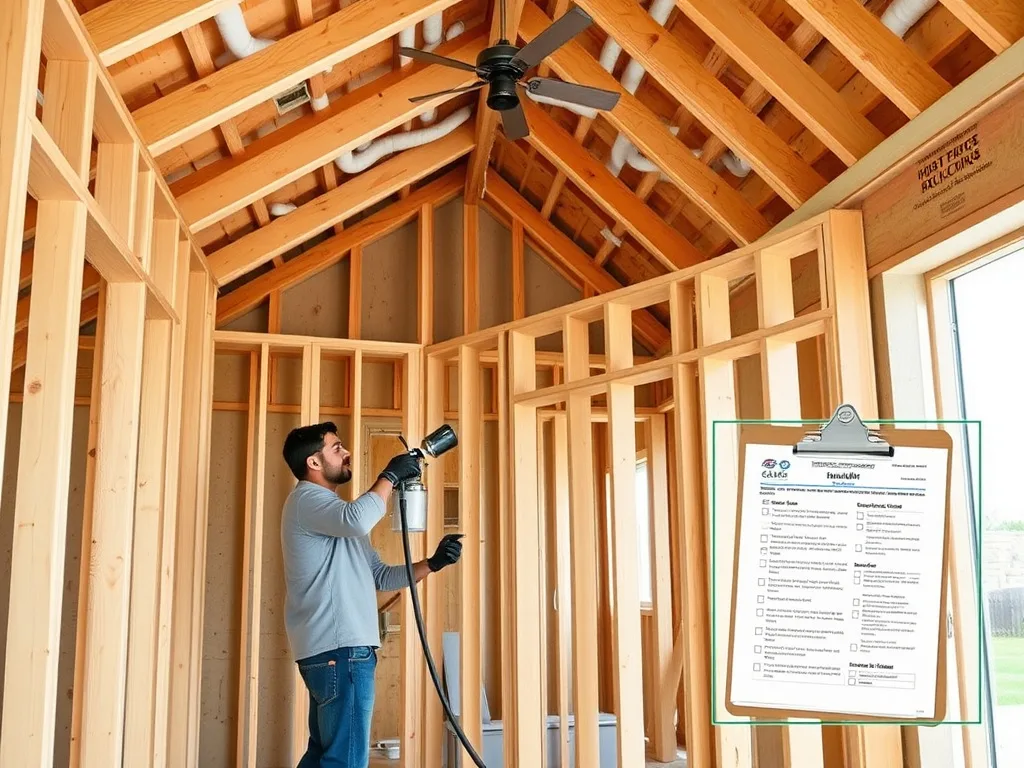
On a new build, insulation only gets one shot. There's no existing wall cavity to retrofit later, no second visit once drywall goes up, and no room for 'we'll fix it on the next one.' Every unit has to pass code on the first inspection, every unit has to perform the same as the last one, and every unit has to hold up long after the crew has moved to the next lot.
Foam Masters exists for exactly that pressure. We're a network of certified spray foam crews, not a single local install team, which means a regional builder or GC gets the same documented process on unit 1 and unit 40 — whether that's one custom home or a 60-lot production run. Every crew we dispatch carries manufacturer certification, every job runs the same QC checklist, and every completed unit gets paperwork a builder can hand to an inspector, a lender, or a warranty department without a scramble.
This isn't about squeezing out a lower HVAC tonnage number. It's about protecting a builder's schedule, reputation, and closing dates from the one trade that's hardest to fix after the fact. Framing gets punch-listed, drywall gets patched, paint gets touched up — but a bad insulation install is buried behind finish materials before anyone but the sub who did it ever sees it, which is exactly why the process behind the install matters more than the invoice line item.
Most insulation bids look identical on paper: same square footage, similar per-unit price, a foam type listed by name. What separates a bid that protects a builder's schedule from one that puts it at risk almost never shows up in that quote — it's whether the crew doing the spraying is certified on the specific system being applied, whether there's a documented check before the wall gets covered, and whether that documentation exists in writing before the first inspector shows up.
Why this holds up over time
- Certified installer documentation provided per unit — ready for code inspectors, energy raters, and lenders without a follow-up request
- Repeatable process across every phase of a multi-unit project, so unit 40 gets the same fill quality as unit 1
- Pre-drywall QC checkpoint built into the schedule, catching gaps before they're buried behind finish materials
- Consistent crew certification standard across our network, so builders working multiple markets aren't vetting a new, unknown installer every time
- Scheduling built around framing and rough-in sequencing, not squeezed in around a single crew's other commitments
- Workmanship warranty backing the install itself, separate from the manufacturer's material warranty
Why Certification Documentation Matters More Than the Bid Number
Code officials don't grade insulation on a curve. IECC compliance is pass or fail, checked against R-value, air-sealing continuity, and installed thickness — and on a spray foam job, most of that gets covered by drywall within days of application. If the install was wrong, the fastest and often only proof is the paperwork from the day it was sprayed, not a re-inspection of a wall that's already closed up.
That's why every Foam Masters crew documents each install: batch and lot numbers for the foam system used, mix-ratio verification, applicator certification on file, and measured thickness readings before the crew leaves the unit. Builders get a packet per unit, not a single blanket invoice for the whole project, so a specific lot number or a specific unit's inspection question can be answered without digging through job-wide records.
For builders juggling several insulation subs across different markets, that consistency is the actual product. A low bid that can't produce this paperwork on request is a liability sitting inside a wall — you just haven't found it yet.
This matters just as much for third-party energy raters and HERS verification as it does for the local building department. When a rater shows up expecting to spot-check installed thickness against a REScheck or IECC compliance path and the only record is a generic invoice, that unit becomes the one that needs extra time on-site — and extra time on-site on one unit tends to slow down every inspection scheduled behind it that same day.
One Repeatable Process, Whether It's One Home or Sixty Units
A single custom home and a 60-lot production phase fail for different reasons if the insulation process isn't locked down. On a custom build, the risk is a one-off crew making a judgment call the builder never sees. On a production run, the risk is drift — the crew that nailed lift thickness on unit 3 rushing by unit 30 because the schedule got tight.
Foam Masters standardizes against both. Every crew in our network runs from the same application checklist regardless of project size: substrate condition check before spraying, mix-ratio confirmation at startup, lift-thickness monitoring during application, and a measured thickness check before sign-off. That checklist doesn't loosen as volume goes up, because it isn't tied to one crew's habits — it's tied to the certification standard we hold every dispatched crew to.
For builders running multiple phases or multiple markets, that means the insulation subcontractor line item stops being a variable and starts being a known quantity you can schedule around.
It also means a plan change mid-project doesn't reset the standard. If a design revision swaps a vented attic for an unvented assembly, or a spec upgrade moves part of a project from open-cell to closed-cell partway through a phase, the certification and checklist travel with the crew — they don't have to be renegotiated unit by unit as the job spec evolves.
- Same certified-crew standard applied to a single home or a full subdivision phase
- Standardized checklist independent of crew size or project volume
- Consistent results across staggered closings and phased release schedules
Where Spray Foam Fits in the Build Sequence — and Why Timing Is a QC Issue
Spray foam goes in after rough electrical, plumbing, and HVAC are set but before insulation inspection and drywall. That window is tight on most schedules, and it's exactly when shortcuts happen — crews spraying around penetrations they should have flagged to the GC, or skipping a substrate check because the framing crew is still finishing a punch list on the next unit over.
We coordinate the spray foam trade call around your actual rough-in completion, not a fixed calendar slot, and we build the pre-cover QC check into that same visit. That means substrate readiness, rough-in penetration sealing, and lift-thickness verification all happen in the same window the schedule already protects for insulation, instead of getting compressed into a rushed pass because a downstream trade is waiting.
The payoff shows up at the insulation inspection: nothing gets flagged that has to be opened back up, because the checks that would have caught it already happened before the inspector arrived.
We also flag anything outside our own scope before it becomes the GC's problem at inspection — an electrical box that isn't fully set, a plumbing penetration that hasn't been finalized, a fire-blocking detail that needs another trade's sign-off first. Catching that during the coordinated pre-spray walk means it gets resolved on the schedule the GC already controls, not discovered by an inspector on a day when re-scheduling costs a week.
What a Failed Inspection or a Post-Closing Callback Actually Costs a Builder
A failed insulation inspection on a single unit means an open wall, a re-inspection fee, and a delayed drywall start that can push a closing date. On a multi-unit project, the same gap repeated across several units can stall an entire phase release. Either way, the cost isn't the insulation redo itself — it's the schedule slip and the trades stacked up behind it.
A callback after closing is worse. A homeowner reporting a cold room, a musty smell, or a utility bill that doesn't match the spec sheet becomes a warranty claim against the builder first, regardless of which sub actually sprayed the foam. Tracing that back to an uncertified install months later, after drywall, paint, and trim are done, is expensive and slow — and it's the builder's name on the warranty call, not the sub's.
Documented, certified installation is what closes that gap before it opens. When the paperwork shows batch numbers, verified mix ratios, and measured thickness at time of install, both the inspection and any later warranty question have an answer on file instead of a guess.
What Certification Actually Verifies on a Crew We Dispatch
Manufacturer certification isn't a marketing badge — it's proof a specific crew has been trained and evaluated on the specific spray foam system they're applying, including the correct mix-ratio settings, ambient temperature and substrate-moisture limits, and the pass-thickness rules for that system's chemistry. Closed-cell and open-cell systems don't behave the same way under a spray gun, and a crew certified on one manufacturer's system isn't automatically qualified on another's without separate training.
When we dispatch a crew to a builder's project, that certification is the baseline requirement, not a preference. It's also why our documentation names the certified applicator directly rather than just the company name on the invoice, so there's a specific, accountable installer tied to a specific unit's install record.
For a builder standardizing an insulation spec across multiple developments or markets, this is the detail that keeps the spec meaningful. A written spec that says 'certified installer required' only protects the project if certification is actually verified and documented crew by crew — which is the standard we hold every dispatch to, not an exception we make for a preferred sub.
Ideal for
- Custom home builders needing IECC-compliant insulation with clean documentation for the final inspection
- Production and semi-custom builders running multiple units on the same plan set who need consistent results lot to lot
- General contractors managing their own insulation subcontractor and wanting certification proof before award
- Multi-family and townhome developers coordinating insulation across staggered unit completions
- Builders who've had a spray foam callback before and are done treating insulation as a commodity bid line item
What affects the cost
New Construction questions, answered
Yes. Every unit gets a per-unit packet covering foam batch and lot numbers, mix-ratio verification, installer certification, and measured thickness readings, so you have a ready answer if an inspector or energy rater asks for backup.
Yes. Our network dispatches certified crews to match your phase release schedule, and every unit runs the same checklist regardless of where it falls in the sequence, so unit 40 isn't a different job than unit 1.
We schedule the spray foam trade call and the pre-cover QC check together, timed to your actual rough-in completion rather than a fixed calendar date, so the checks happen before drywall closes the wall up.
It's rare with our pre-cover QC check already run, but if an inspector flags something, our documentation shows exactly what was verified and when, which speeds up the correction and re-inspection instead of starting from scratch.
Crew assignment depends on your project's location, since we're a network of certified installers rather than one local team. What stays constant across every market is the certification standard and the QC checklist every crew runs.
Either. We coordinate directly with whoever manages the insulation trade on your project, whether that's the builder's own super or a general contractor running the sub trades.
New Construction is only as good as the crew and the checks behind it
Two crews can quote the same new construction scope and hand you two very different results, because the material never tells on a rushed pass — a wall board or attic deck closes over the work either way. Foam Masters connects you with installers who are certified specifically on this service, trained to catch the technique mistakes that don't show up until years later.
We work with homeowners, builders and general contractors, and commercial property owners nationwide, and every job starts with a free, no-pressure assessment scoped to your specific space.
What you get isn't just a finished spray — it's a documented job. Certified crews record what they checked as they worked: lift thickness, mix ratio, full-cavity fill, whatever the service calls for. That record, plus a written workmanship warranty on the installation itself, is what backs up the new construction you paid for, long after the crew has moved on to the next job.
Free, certified assessment
A certified installer evaluates your space and gives you a clear, itemized quote — no pressure, no guesswork.
Quality-checked application
Your new construction is applied to spec, with lift, mix, and coverage checked on site as the job happens.
Documented, warranty-backed
A written workmanship warranty and a job-specific QC record you can keep, not just a verbal assurance.
Related services
Ready for a free new construction quote?
Tell us about your project and we'll connect you with a certified crew for this exact service — a clear quote, a written scope, and a workmanship warranty in writing.