Closed-Cell Spray Foam Insulation
Closed-cell spray foam is the least forgiving material in the spray foam category to install correctly, which is exactly why Foam Masters treats every closed-cell job as a certified-crew, quality-checked scope of work.
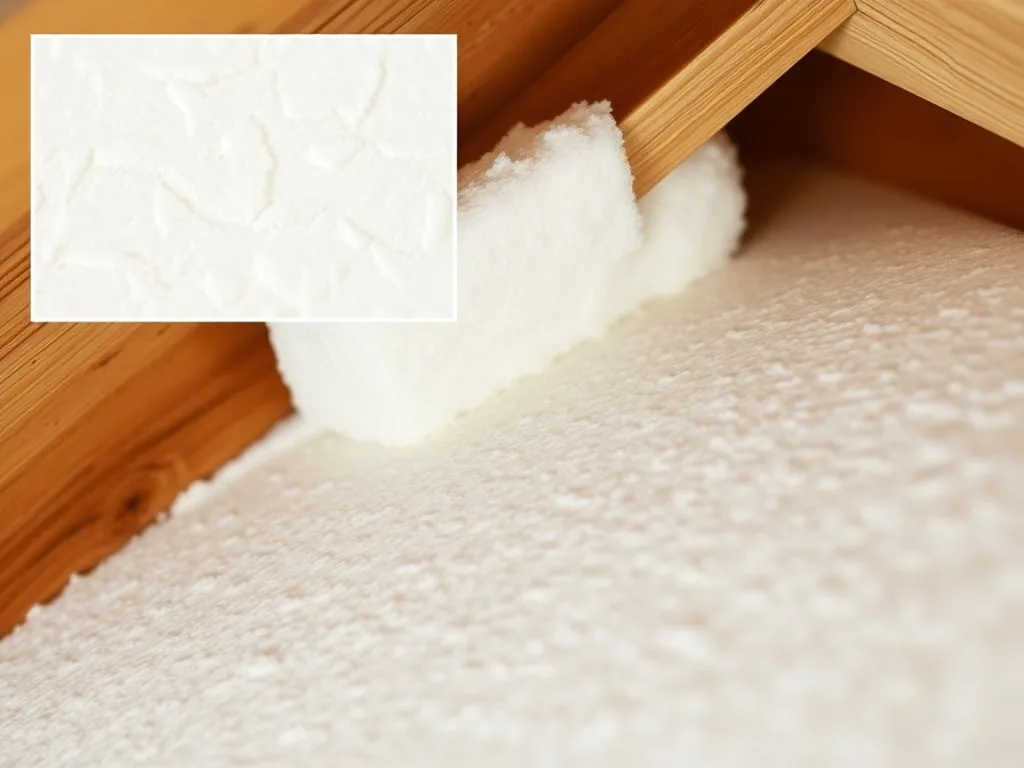
Closed-cell spray foam is unforgiving in a way most homeowners never think to ask about. It is a two-component plastic that reacts chemically the instant it leaves the gun, and that reaction is only correct within a narrow window of mix ratio, chemical temperature, and spray-pass thickness. Get any one of those variables wrong and the foam still looks like foam once it cures. It just does not perform like it should, and there is often no easy way to tell from the surface.
That is the reason Foam Masters leads with certification on this particular service rather than burying it in fine print. Every crew dispatched for a closed-cell job is trained specifically on this material's tighter tolerances, every job is quality-checked before and after application, and every install carries a workmanship warranty that backs the crew's process, not just the manufacturer's chemical formulation.
Foam Masters is the standard-of-craft spray foam network: every crew is certified, every job is warranty-backed, and every install is quality-checked, not just quoted. On closed-cell work specifically, that standard is what separates a rigid, structurally sound insulation layer from a brittle, under-adhered one that fails quietly behind a wall or under a roof deck.
Once the installation itself is done correctly, closed-cell foam brings real, well-documented performance to a building: R-6 to R-7 per inch, an effective vapor barrier at roughly 1.5 inches of thickness, and enough rigidity to add meaningful racking strength to a wall assembly. Those numbers are real and they matter, but they are the payoff of a correct install, not a substitute for one.
Homeowners and builders who call Foam Masters for closed-cell work are usually solving a specific problem: a damp crawl space, a below-grade wall, a roof deck that needs a rigid structural layer, or an addition where every inch of cavity depth is precious. Those are all correct uses for the material. What determines whether the job actually solves the problem, though, is not the product data sheet. It is whether the crew holding the spray gun understood the chemistry, respected the pass-thickness limits, and documented what they did along the way.
Why this holds up over time
- R-6 to R-7 per inch, roughly double the R-value per inch of open-cell foam, verified against manufacturer spec sheets by the installing crew
- Functions as a vapor barrier at approximately 1.5 inches of cured thickness, eliminating the need for a separate poly vapor barrier in most assemblies
- Rigid, high-density cell structure adds meaningful structural racking strength to stud-bay and roof-deck applications
- Closed-cell structure resists bulk water intake, making it the correct choice for below-grade, flood-zone, and moisture-prone applications
- Every job is backed by a workmanship warranty covering the installing crew's application, separate from the manufacturer's material warranty
- Certified applicators verify mix ratio and pass thickness in real time rather than spraying to a rough visual estimate
Why This Is the Foam That Punishes a Bad Installer Fastest
Open-cell foam is comparatively tolerant of small application errors. Closed-cell is not. Because it is a rigid, tightly cross-linked plastic rather than a soft, spongy fill material, closed-cell foam has a much narrower band of correct mix ratio, chemical temperature, and pass thickness before something goes visibly or invisibly wrong.
An off-ratio mix, even by a small margin, can leave the cured foam brittle, prone to cracking, or poorly adhered to the substrate. A pass that is sprayed too thick in one lift generates excess exothermic heat as the chemical reaction runs, which can scorch the foam internally, shrink it away from the substrate, or in rare cases create a fire risk during cure. None of these failure modes are obvious from a quick look at a finished wall or ceiling.
This is precisely why crew certification is the lead differentiator on this service rather than an afterthought. A certified closed-cell applicator is trained to read the equipment's live temperature and pressure gauges, hold to manufacturer-specified pass thicknesses, and recognize the early visual and tactile signs of an off-ratio mix before it becomes a hidden defect behind a wall.
It also means the crew knows when to stop. An uncertified applicator under pressure to finish a job on schedule has every incentive to keep spraying through a marginal batch or a substrate that is running colder than spec allows. A certified crew is trained to pause, recheck equipment, or reschedule a portion of the work rather than lock a known problem inside a finished wall, because the workmanship warranty attached to the job is only as good as the discipline behind it.
Substrate Prep Before the First Pass Is Sprayed
Closed-cell foam's adhesion depends heavily on the condition of whatever it is being sprayed onto. Framing that is wet, frosted, dusty, or running colder than the chemical manufacturer's minimum substrate temperature will not accept the foam correctly no matter how precise the mix ratio is. A certified crew checks substrate moisture and temperature before the rig is even fired up, and will delay a job rather than spray onto a surface that is going to compromise adhesion from the first pass.
This step is easy to skip and impossible for a homeowner to verify after the fact, which is exactly why Foam Masters builds it into the standard job process rather than leaving it to individual crew discretion. A substrate check that takes ten minutes at the start of a job is the difference between foam that bonds correctly for the life of the building and foam that looks fine on install day but delaminates in a cold snap two winters later.
- Framing moisture content checked with a meter before spraying begins, not estimated by eye
- Substrate temperature verified against the chemical manufacturer's documented minimum before the first pass
- Dust, frost, and surface contaminants cleared from framing members prior to application
- Jobs rescheduled rather than sprayed onto a substrate that will not support correct adhesion
Mix Ratio: The Variable Homeowners Never See
Closed-cell spray foam is created on-site by combining two chemical components, commonly called the A-side and B-side, at a fixed 1:1 ratio through a heated plural-component rig. That ratio has to stay correct not just at the start of a job but throughout, as ambient temperature, hose length, and equipment wear all push against it.
A certified crew checks and logs mix-ratio readings as part of the job, not as an optional extra step. That single quality-control habit is the difference between foam that cures to full design strength and foam that looks identical on day one but degrades, shrinks, or delaminates from the substrate months later.
- Plural-component rig calibrated and ratio-checked before spraying begins
- A-side and B-side chemical temperatures verified against manufacturer spec before the first pass
- Ratio spot-checks logged during longer jobs, not assumed to hold from setup to finish
- Substrate temperature and humidity checked, since both affect cure quality on closed-cell chemistry
Pass Thickness and the Adhesion Problem
Closed-cell foam has to be built up in controlled passes, or lifts, of a specific maximum thickness per pass, typically around one to two inches depending on the product and manufacturer guidance. Spraying a single pass too thick traps exothermic heat inside the foam as it cures, which can cause internal scorching, shrinkage cracks, and separation from the substrate that is invisible from the finished surface.
A certified crew builds closed-cell foam in the correct number of measured lifts, allowing appropriate time between passes for heat to dissipate, rather than rushing a job to a single thick application to save time on the truck clock. This is a discipline problem as much as a technical one, which is exactly why Foam Masters treats it as a certification and quality-control issue rather than leaving it to individual crew judgment.
- Foam built up in manufacturer-specified lift thicknesses, never oversprayed in a single rushed pass
- Adequate time allowed between passes for proper heat dissipation and cure
- Substrate checked for scorch marks, excess shrinkage, or delamination during the job, not just at final walkthrough
- Application pace matched to the job, not to a per-day production quota
Density, R-Value, and Where Closed-Cell Is the Right Call
Closed-cell spray foam typically cures to a density around 2.0 pounds per cubic foot, which is what gives it its rigidity, its structural contribution to a wall or roof assembly, and its R-6 to R-7 per inch performance. That density is also what makes it function as a vapor barrier once it reaches roughly 1.5 inches of cured thickness, a threshold worth knowing before finishing a wall or roof assembly around it.
These are genuinely useful facts for planning a project, and Foam Masters documents them plainly for every closed-cell job. They are presented here as supporting detail, though, not as the reason to choose a contractor. Two crews can install foam that reaches identical density and R-value numbers on a spec sheet, and one of them can still have installed it incorrectly in ways that only show up as a callback months later. The certification and process behind the number is what actually protects the homeowner.
Closed-cell foam is the correct choice where moisture resistance, structural rigidity, or maximum R-value per inch in a limited cavity depth is the priority: below-grade foundation walls, flood-zone construction, roof decks that benefit from added racking strength, and additions where every inch of cavity depth counts. It is a poor fit for large open-cavity fills where its higher material cost and lower vapor permeability offer no real advantage over open-cell foam, and a certified Foam Masters crew will say so rather than defaulting to the higher-margin product on every job. That kind of honest scoping is itself part of the quality-control standard the network runs on. A certified installer's job is to specify the right foam for the application, not simply the foam that was quoted.
Ideal for
- Below-grade foundation walls and basement rim areas where moisture resistance is non-negotiable
- Flood-zone construction and coastal builds requiring FEMA-compliant flood-resistant insulation
- Roof decks and cathedral ceilings where added structural rigidity and racking strength are a design benefit
- Homeowners who want a combined air barrier, vapor barrier, and insulation layer in a single application
- Additions or retrofits where interior space is at a premium and higher R-value per inch is required
- Commercial and light-industrial buildings where a rigid, high-density envelope layer is specified
What affects the cost
Closed-Cell Spray Foam questions, answered
Closed-cell foam cures through a fast, exothermic chemical reaction that only produces correct results within a narrow mix-ratio and pass-thickness window. Errors that would be minor in a softer material like open-cell foam can leave closed-cell foam brittle, poorly adhered, or internally scorched, and none of these defects are visible from the finished surface. Certified installers are trained specifically to control these variables in real time.
Closed-cell spray foam provides approximately R-6 to R-7 per inch, roughly double the R-value per inch of open-cell foam, though the real-world number depends on correct mix ratio and cure being achieved during installation.
Closed-cell spray foam typically runs $3.00 to $5.00 per square foot installed, with a typical 1,000 square foot attic application costing roughly $4,500 to $7,000. Exact pricing depends on cavity depth, access, and the number of lifts required for a correct, code-compliant application.
Yes. At approximately 1.5 inches of cured thickness, closed-cell spray foam functions as a vapor barrier, which can eliminate the need for a separate polyethylene vapor barrier in many wall and roof assemblies. Reaching that threshold reliably depends on the crew building the foam up in correct, verified lifts.
Yes, closed-cell foam's closed-cell structure resists bulk water intake, making it the appropriate choice for below-grade foundation walls, flood-zone construction, and other moisture-prone applications where open-cell foam is not suitable.
Closed-Cell Spray Foam is only as good as the crew and the checks behind it
Two crews can quote the same closed-cell spray foam scope and hand you two very different results, because the material never tells on a rushed pass — a wall board or attic deck closes over the work either way. Foam Masters connects you with installers who are certified specifically on this service, trained to catch the technique mistakes that don't show up until years later.
We work with homeowners, builders and general contractors, and commercial property owners nationwide, and every job starts with a free, no-pressure assessment scoped to your specific space.
What you get isn't just a finished spray — it's a documented job. Certified crews record what they checked as they worked: lift thickness, mix ratio, full-cavity fill, whatever the service calls for. That record, plus a written workmanship warranty on the installation itself, is what backs up the closed-cell spray foam you paid for, long after the crew has moved on to the next job.
Free, certified assessment
A certified installer evaluates your space and gives you a clear, itemized quote — no pressure, no guesswork.
Quality-checked application
Your closed-cell spray foam is applied to spec, with lift, mix, and coverage checked on site as the job happens.
Documented, warranty-backed
A written workmanship warranty and a job-specific QC record you can keep, not just a verbal assurance.
Related services
Ready for a free closed-cell spray foam quote?
Tell us about your project and we'll connect you with a certified crew for this exact service — a clear quote, a written scope, and a workmanship warranty in writing.