Open-Cell Spray Foam Insulation
Open-cell spray foam is a forgiving, expandable material on paper — but a full, void-free cavity fill depends entirely on the crew running the gun. Foam Masters connects you with certified installers who check their own work before they call a job finished.
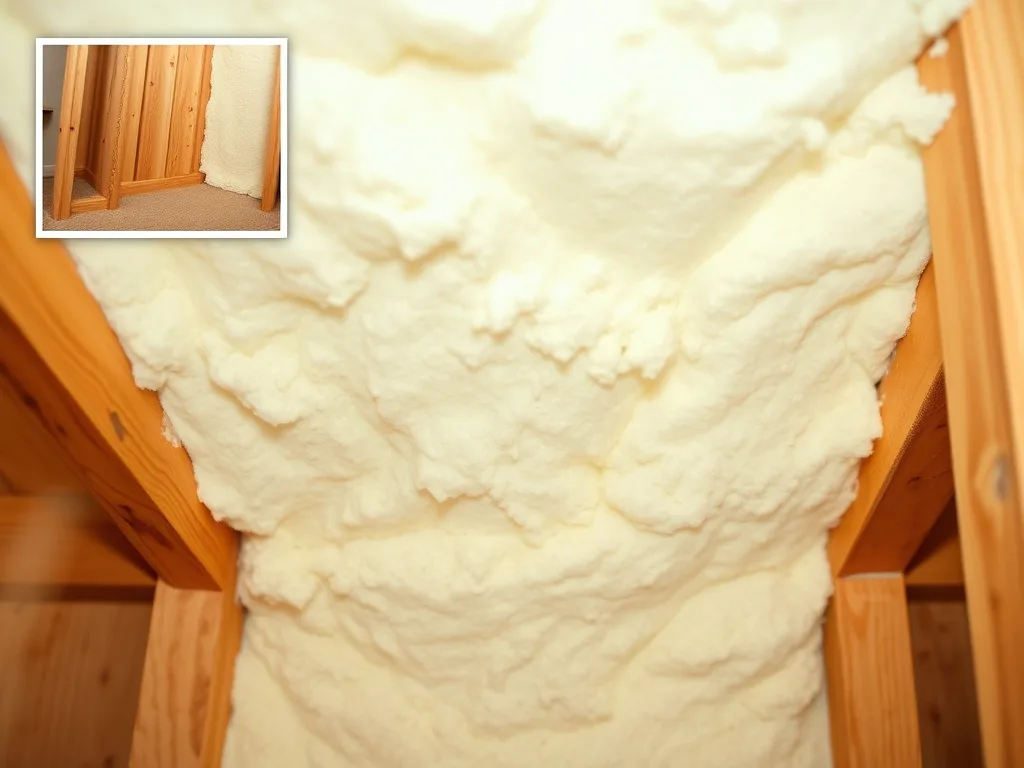
Open-cell spray foam has a reputation as the easier of the two spray foam chemistries to install, and in a lot of ways that's true — it expands aggressively, it's more forgiving of minor application variance, and it costs less per board foot than closed-cell. But 'more forgiving' is not the same thing as 'foolproof.' The gap between a properly filled wall or attic cavity and one with hidden voids, thin spots, or an inconsistent lift comes down almost entirely to the crew holding the spray gun — not the material itself.
Foam Masters is the standard-of-craft spray foam network: every crew is certified, every job is warranty-backed, and every install is quality-checked, not just quoted. For open-cell work specifically, that means installers who are trained to read a cavity as they spray it — watching lift thickness build in real time, controlling pass speed so the foam doesn't skip low spots, and confirming full coverage before moving to the next stud bay or rafter section.
That standard matters more with open-cell than most homeowners assume. Because the material expands so dramatically, it's easy for an inexperienced or rushed crew to mistake a quick surface pass for a complete fill. The foam looks like it's covering everything from the front of the cavity, but a lift that never built to full depth, or a pass that skipped a corner behind a stud, doesn't show up until the drywall or roof decking goes back on and the problem is buried for good.
This page walks through what correct open-cell technique actually looks like, where the material earns its keep as a sound-dampening and air-sealing product, and what a documented, quality-checked install includes that a rushed one won't.
Why this holds up over time
- Certified applicators trained specifically on open-cell expansion behavior and lift-thickness control
- Full-cavity fill verification — no guessing whether a stud bay or rafter section filled completely
- Strong sound-dampening performance between floors, rooms, and mechanical spaces
- Air-sealing and insulation performance combined into a single, continuously-monitored application
- Vapor-permeable material choice reviewed against your specific assembly to avoid trapped moisture
- Every job backed by a documented workmanship warranty, not just a manufacturer material warranty
Expansion Isn't the Same as Fill
Open-cell foam expands to roughly 100 times its liquid volume, which is exactly why it has a reputation for being easy to apply. That expansion ratio does a lot of the work for an installer — but it also hides mistakes well, at least at first glance. A pass sprayed too thin, too fast, or at the wrong distance from the substrate can look fully filled from the surface while leaving a soft void or thin section behind wiring, blocking, or an odd framing angle.
A certified crew treats expansion as something to manage, not something to rely on. That means controlling gun distance and pass speed so each lift builds to a predictable thickness, then reading the cavity — visually and by feel — before calling it complete. It's a small technical discipline that has an outsized effect on whether the finished wall or attic actually performs the way the spec sheet says it should.
Ambient temperature and substrate temperature both affect how open-cell foam rises and cures, which is another variable an experienced applicator is watching that an untrained one may not even know to check. Spraying too cold a surface can slow the rise and leave a denser, under-expanded pass; spraying too hot can cause the foam to rise too fast and pull away from the substrate as it cures. Certified installers check job-site conditions before they ever pull the trigger, not after a cavity comes back looking wrong.
- Controlled pass speed and gun distance to avoid thin or skipped sections
- Lift-thickness monitored in real time rather than estimated after the fact
- Irregular cavities — around wiring, blocking, and odd framing angles — checked individually, not sprayed over
What a Full-Cavity Fill Check Actually Looks Like
'Full-cavity fill' is easy to write on an estimate and much harder to actually verify without a deliberate process. Certified Foam Masters crews build a post-spray check into every open-cell job: a visual and tactile pass across finished cavities looking for low spots, feathered edges that didn't bond to the substrate, or sections where the foam pulled away from a stud or joist as it cured.
This is the step that gets skipped on a rushed or bargain job — not because it's difficult, but because it takes time the crew wasn't quoted for. On a properly scoped job, that check is built into the timeline from the start, and it's part of what you're paying a certified installer to do.
On attic and roof-deck applications specifically, this check matters even more because the surface is irregular by nature — rafters, ridge beams, valleys, and HVAC penetrations all create spots where a fast pass tends to shortchange coverage. A certified crew works these sections methodically, cavity by cavity, rather than spraying broad strokes across the whole roof deck and hoping the expansion evens itself out. Trim scrap or a thickness gauge is used to spot-check lift depth against the job's design thickness before the crew signs off.
- Visual pass for low spots, gaps, or feathered edges after each section
- Tactile check for proper adhesion to studs, joists, and sheathing
- Any identified void patched and re-checked before the crew moves to the next area
Sound Dampening: The Underrated Reason to Choose Open-Cell
Open-cell's softer, more porous cell structure absorbs airborne sound significantly better than closed-cell foam or traditional batt insulation of the same thickness. That makes it a strong choice for interior partition walls, floor assemblies between living spaces, media rooms, and walls shared with a garage or mechanical room — applications where the acoustic benefit matters at least as much as the R-value.
This performance only shows up consistently when the cavity is actually filled edge-to-edge. A partial fill still insulates reasonably well but loses a meaningful share of its sound-dampening advantage, since sound travels easily through the gaps a rushed pass leaves behind.
Homeowners converting a bonus room, home office, or nursery into a quieter space often specifically request open-cell for this reason, and it's a good instinct — but it only pays off if the installer treats acoustic performance as a real spec, not an incidental side effect. A certified crew sprays interior partition walls with the same lift-thickness discipline used on an exterior wall, because a thin section in a 'just for sound' wall defeats the entire point of the upgrade.
- Noticeably better acoustic performance than batt insulation of comparable thickness
- Common use case: interior partition walls, floor/ceiling assemblies, media rooms, garage-adjacent walls
- Acoustic benefit depends on complete cavity fill, not just R-value coverage
Vapor Permeability and Where Open-Cell Fits an Assembly
Open-cell foam is vapor-permeable, meaning it allows moisture vapor to pass through it rather than blocking it the way closed-cell does. That's a genuine advantage in some assemblies — it lets a wall or roof dry to one side if moisture gets in from somewhere else — and a liability in others, particularly in humid climates or below-grade applications where a vapor barrier is the safer engineering choice.
Because open-cell is R-3.5 to R-3.7 per inch (lower than closed-cell's R-6 to R-7 per inch), it also typically requires more cavity depth to hit a target R-value. Part of a certified installer's job is confirming, before spraying starts, that open-cell is the technically correct material for your specific assembly and climate zone — not just the cheaper option on the quote.
This is also where a certified crew's documentation earns its keep. When open-cell is the right call, the job record should note the cavity depth sprayed, the target R-value it was designed to hit, and whether a separate vapor retarder was installed where the assembly called for one. That record is what a future buyer, appraiser, or building inspector can actually check — a verbal assurance that 'the foam guys knew what they were doing' isn't documentation, and it isn't a substitute for it.
- Vapor-permeable — allows an assembly to dry to the interior in the right conditions
- R-3.5 to R-3.7 per inch, versus closed-cell's R-6 to R-7 per inch
- Climate zone and assembly type reviewed before material selection, not assumed by default
Where Certification Shows Up on the Invoice
None of the checks above are visible once drywall or attic decking goes back up, which is exactly why they matter. A homeowner comparing two open-cell bids side by side generally can't see the difference between a crew that reads each cavity as it sprays and one that's moving as fast as possible to the next job. The difference shows up years later — in an attic with cold spots, a wall with an unexplained draft, or a warranty claim with no documentation behind it.
Every Foam Masters open-cell install comes with a documented workmanship warranty and a record of the QC checks performed on your specific job — not just a manufacturer's material warranty on the foam itself.
It's worth understanding the difference between those two warranties before any crew shows up. A manufacturer's material warranty covers defects in the foam chemical itself — rare, and largely out of any installer's hands. A workmanship warranty covers the installation: whether the crew achieved full-cavity fill, correct lift thickness, and proper adhesion. A suspiciously low open-cell bid is far more likely to be cutting corners on the second warranty than getting a better deal on the first, since the material cost is close to fixed and labor time is where a bargain price actually comes from.
- Documented workmanship warranty on top of the manufacturer's material warranty
- Job-specific QC record — not a generic certificate
- Certified crew credentials verifiable before work starts, not taken on faith
Ideal for
- Interior walls and floor assemblies where sound dampening matters as much as thermal performance
- Vented attics and unfinished roof decks where a lighter-density fill is the correct engineering choice
- Homeowners who want air-sealing and insulation handled as one continuously-verified pass
- Budget-conscious projects where open-cell's lower installed cost fits the scope without cutting QC corners
- Retrofit and remodel work where open-cell's aggressive expansion helps it reach irregular cavity shapes
What affects the cost
Open-Cell Spray Foam questions, answered
Open-cell spray foam typically runs $1.50 to $3.50 per square foot installed, depending on cavity depth, accessibility, and prep work. A typical 1,000 square foot attic runs roughly $3,000 to $5,000. Get a firm number for your specific project by calling 844-967-5247.
Ask directly for current certification credentials and ask what quality-control checks are built into the job — specifically, how they verify lift thickness and full-cavity fill before finishing. A certified crew should answer both questions without hesitation. Foam Masters verifies installer certification before any crew is matched to your job.
Yes, and it's one of open-cell's genuine strengths — its aggressive expansion reaches around wiring, blocking, and odd framing angles better than batt insulation. The risk isn't the material's ability to expand into these spaces, it's whether the installer verifies that expansion actually reached every section, which is why a post-spray fill check matters.
Open-cell is generally the better choice for sound dampening because of its softer, more porous cell structure, which absorbs airborne sound more effectively than closed-cell foam of the same thickness. It's a common pick for interior partition walls and floor assemblies for this reason, in addition to its insulation value.
It depends on your climate zone and where in the assembly it's being installed — open-cell is vapor-permeable, which is an advantage in some assemblies and a reason to add a separate vapor barrier in others, particularly in humid climates or below-grade spaces. A certified installer should walk through this with you before spraying, not after.
Open-Cell Spray Foam is only as good as the crew and the checks behind it
Two crews can quote the same open-cell spray foam scope and hand you two very different results, because the material never tells on a rushed pass — a wall board or attic deck closes over the work either way. Foam Masters connects you with installers who are certified specifically on this service, trained to catch the technique mistakes that don't show up until years later.
We work with homeowners, builders and general contractors, and commercial property owners nationwide, and every job starts with a free, no-pressure assessment scoped to your specific space.
What you get isn't just a finished spray — it's a documented job. Certified crews record what they checked as they worked: lift thickness, mix ratio, full-cavity fill, whatever the service calls for. That record, plus a written workmanship warranty on the installation itself, is what backs up the open-cell spray foam you paid for, long after the crew has moved on to the next job.
Free, certified assessment
A certified installer evaluates your space and gives you a clear, itemized quote — no pressure, no guesswork.
Quality-checked application
Your open-cell spray foam is applied to spec, with lift, mix, and coverage checked on site as the job happens.
Documented, warranty-backed
A written workmanship warranty and a job-specific QC record you can keep, not just a verbal assurance.
Related services
Ready for a free open-cell spray foam quote?
Tell us about your project and we'll connect you with a certified crew for this exact service — a clear quote, a written scope, and a workmanship warranty in writing.