What Actually Happens During a Quality Spray Foam Installation (And Why Most Homeowners Never See It)
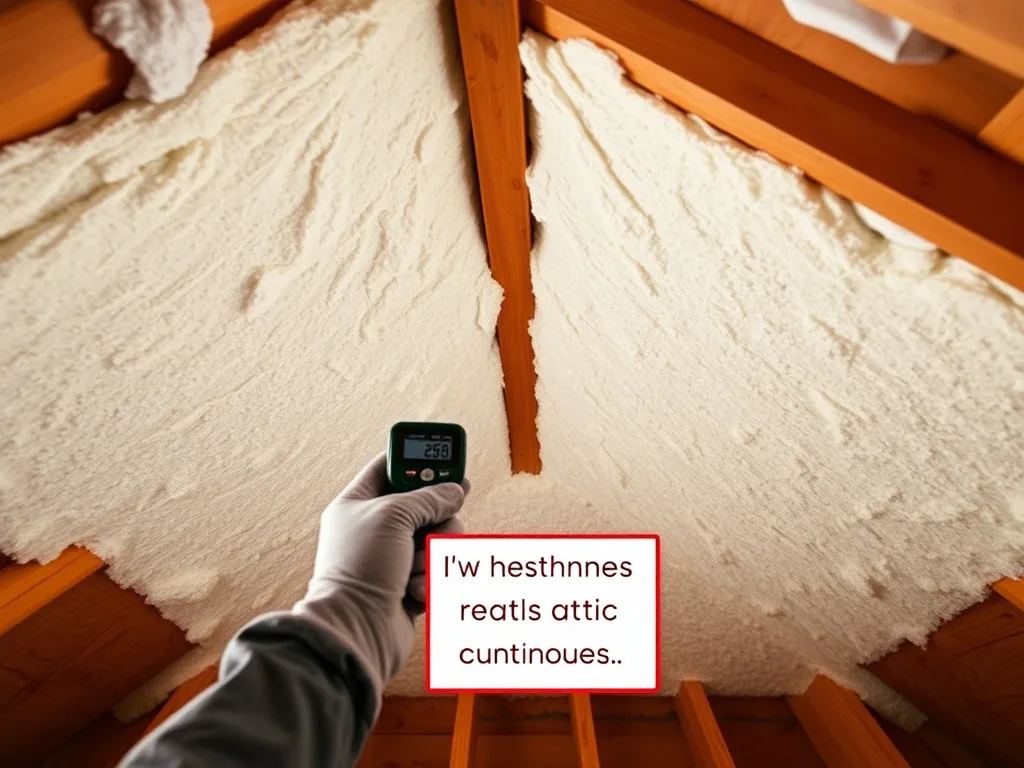
Stand in an attic the day after a spray foam job wraps up, and a $3,000 install can look a lot like a $5,000 install. The foam is tan or off-white, it's stuck to the roof deck, and it smells faintly of chemistry for a day or two. Visually, you cannot tell a rushed, uncertified pass from a properly quality-controlled one. That's the uncomfortable truth about this trade: the parts that actually determine whether the job holds up for twenty years are almost entirely invisible by the time a homeowner walks in to look at it.
The foam itself isn't the differentiator. Two crews can show up with the same two-component chemistry, the same rig, and the same brand of tank set, and produce wildly different results. What separates a warranty-backed install from a callback waiting to happen is a sequence of quality-control checkpoints that a certified crew runs before the gun ever fires, while it's spraying, and after it's done. None of that shows up in a "before and after" photo. Here's what's actually supposed to happen.
Checkpoint 1: Substrate and Moisture Check, Before a Single Pass
Spray foam is not a forgiving material when it comes to what it's sprayed onto. Closed-cell and open-cell foam both need a substrate that's within an acceptable moisture range and free of surface contaminants — dust, oil residue, standing condensation, or frost, depending on the season. Spray foam over a damp roof deck, a wet rim joist, or a crawl space wall that's still weeping from a recent rain doesn't just risk poor adhesion; it can trap that moisture against wood framing, which is exactly the mold and rot scenario spray foam is supposed to prevent, not cause.
A certified crew runs a moisture meter across the substrate — roof decking, subfloor, foundation wall, whatever the application — before setting up equipment. If a reading comes back too high, the job gets rescheduled or the moisture source gets addressed first. An uncertified or rushed crew, working on a tight schedule, is far more likely to spray anyway and hope for the best. You won't see this decision get made. You'll only see the consequence, years later, when a wall cavity turns out to have been sealed over a problem instead of before one.
Ambient conditions matter too
Temperature and humidity in the space being sprayed affect how the chemical reaction behaves. Spraying in conditions outside the foam system's approved range can cause poor expansion, friable (crumbly) foam, or surface tackiness that never fully cures. Checking ambient temperature and substrate temperature — not just eyeballing the room — is a five-minute step that either happens or doesn't.
Checkpoint 2: Mix-Ratio Verification
Spray foam is a two-component system — an isocyanate ("A" side) and a resin blend ("B" side) — that has to combine at close to a 1:1 ratio to cure correctly. When that ratio drifts even modestly off-spec, the result isn't always obvious to the naked eye right after application. Foam sprayed "off-ratio" can look fine on day one and then shrink, crack, off-gas longer than it should, or fail to bond properly to the substrate over the following weeks.
This is the checkpoint where certified equipment and certified installers matter more than almost anywhere else in the process. A proportioner has to be calibrated and checked at startup, and a trained sprayer is trained to recognize the visual and tactile cues of off-ratio foam in real time — a change in cell structure, a shift in color, or foam that isn't tack-free on the expected timeline — and stop to correct it before spraying another twenty feet of wall. An uncertified crew running equipment that hasn't been checked, or a sprayer who doesn't know what off-ratio foam looks like mid-pass, can lay down a whole cavity's worth of compromised material before anyone notices — if anyone ever does.
Checkpoint 3: Lift-Thickness Monitoring, Pass by Pass
Spray foam is applied in "lifts" — thin layers, typically an inch to two inches at a time, rather than one thick application. This isn't just technique preference; both open-cell and closed-cell foam generate an exothermic reaction as they cure, and spraying too thick in a single pass can cause the interior of the foam to overheat, leading to scorching, off-gassing, or a foam core that never properly cures even though the surface looks set.
A certified crew monitors lift thickness as they go — using a wet-mil gauge or trained visual/tactile judgment — and lets each pass flash off before applying the next. On an irregular surface like a roofline with rafters, dormers, and transitions, that means constantly adjusting pass thickness rather than running one uniform sweep across the whole area. It's slower. It's also the difference between a cavity that's fully and evenly filled and one with hidden voids or scorched sections buried under a surface that looks smooth from below.
- Thin, controlled lifts rather than one thick pass
- Time allowed between lifts for proper flash-off and cure
- Adjusted pass thickness across irregular framing, not a uniform sweep
- Visual and tactile checks for scorching or improper cell structure as the job progresses
Checkpoint 4: Post-Spray Thickness and Coverage Check
The final QC step happens after the gun is off. A certified installer measures cured thickness at multiple points — not just a glance at the finished surface — to confirm the specified R-value was actually achieved across the cavity, not just at the easiest-to-reach spots. Coverage gets checked for gaps: corners, top plates, around penetrations, and transitions where a rushed pass commonly leaves thin spots or misses entirely.
On a job that's done right, this check gets documented — thickness readings, photos, and notes tied to the specific areas sprayed — because that documentation is what a real workmanship warranty is backed by. A crew that can't show you what thickness they achieved and where isn't in a position to warranty the job in any meaningful way, no matter what the paperwork says.
Why This Invisible Process Is the Actual Product
None of these four checkpoints are visible in a finished photo. That's exactly why they're so easy for a corner-cutting crew to skip and so hard for a homeowner to verify after the fact. When you're comparing quotes, you are not really comparing foam — every crew is buying similar chemistry from similar suppliers. You're comparing whether a moisture check happens before the truck even gets set up, whether the equipment was calibrated that morning, whether the sprayer knows what off-ratio foam feels like under the gun, and whether anyone measured the result before calling it done.
This is the whole reason certification and a documented process matter more than a stat-tile R-value number. Foam Masters is the standard-of-craft spray foam network — every crew is certified, every job is warranty-backed, and every install is quality-checked, not just quoted. That means the checkpoints above aren't optional extras; they're the baseline for every job connected through the network, attached to a workmanship warranty that only means something because the underlying QC actually happened.
If you're getting quotes for a spray foam project, ask directly whether the crew checks substrate moisture before spraying, how they verify mix ratio, whether they monitor lift thickness during application, and whether they measure and document final coverage. A contractor with a real process will answer specifically. One that can't is telling you, indirectly, which of these steps they skip.
Frequently asked questions
Not reliably. Surface appearance can look nearly identical between a properly quality-controlled install and a rushed one. Problems like off-ratio mix, scorching from thick lifts, or thin coverage in corners are usually hidden below the surface and only show up later as brittleness, shrinkage, odor, or reduced performance.
Spray foam is applied in thin layers (lifts), typically 1-2 inches at a time, rather than one thick pass. This controls the heat generated as the foam cures. Spraying too thick in a single pass can cause the foam core to overheat, scorch, or fail to cure properly even when the surface looks fine — which is why certified crews monitor and limit lift thickness as they work.
Yes. Spraying over a substrate that's too wet — a damp roof deck, a wet rim joist, or a crawl space wall still holding moisture — risks poor adhesion and can trap moisture against framing. A certified crew checks substrate moisture with a meter before starting and will reschedule or address the moisture source first if readings are too high.
It should. A crew that measures and documents cured thickness and coverage at multiple points can actually stand behind a warranty claim, because there's a record of what was achieved. A warranty with no underlying inspection or documentation behind it is much harder to enforce if a problem shows up later.
Ready for a free quote?
Tell us about your project and we'll connect you with a certified crew in our network — a clear quote, a written scope, and a workmanship warranty in writing.