Wall Spray Foam Insulation (New & Existing Walls)
Two different wall jobs, one certified standard: open-cavity spraying in new construction and no-demo injection retrofits in finished walls, both backed by documented technique and a workmanship warranty.
Foam Masters is the standard-of-craft spray foam network — every crew is certified, every job is warranty-backed, and every install is quality-checked, not just quoted. Wall insulation is where that standard matters most, because 'spray foam for walls' actually describes two unrelated skill sets wearing the same name.
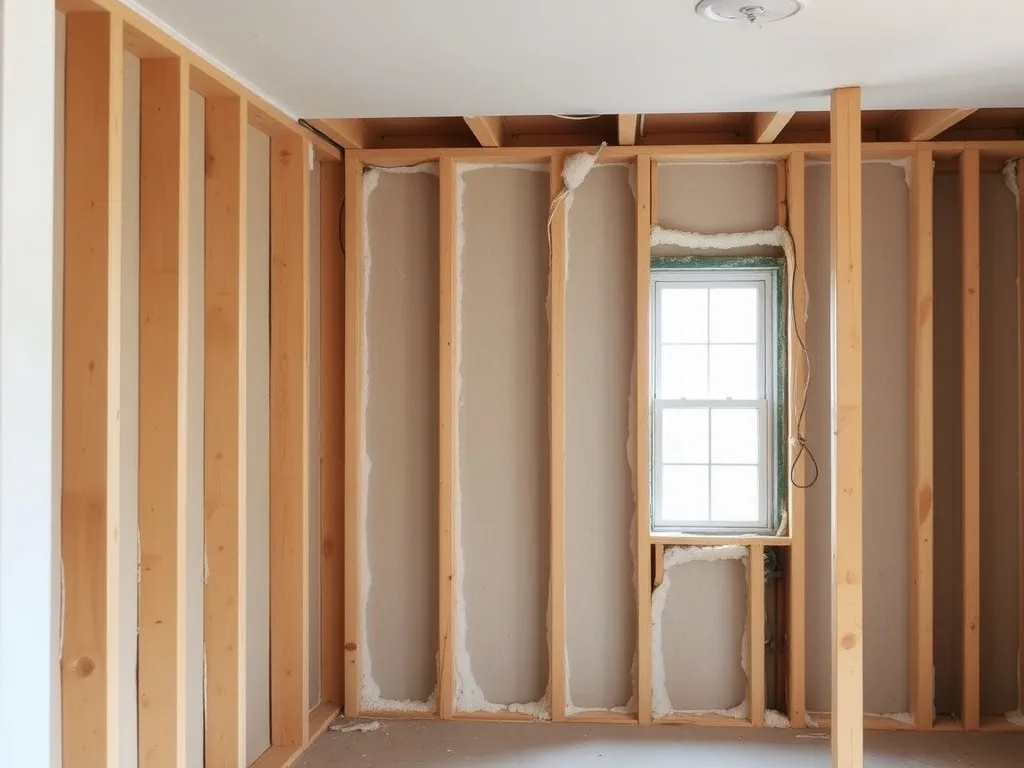
In new construction, a crew sprays open studs before drywall goes up — full visual access, straightforward lift-and-fill technique, and an inspector standing by to catch mistakes. In an existing home, there is no open cavity to look into. A retrofit crew drills a pattern of small access holes through the exterior siding or interior drywall, feeds foam through a wand or injection tube into a finished, closed wall, and has to know the cavity is fully filled without ever seeing inside it.
That second job is where an uncertified installer does real damage — and it is often hidden damage, because the drywall or siding goes back on before anyone but the crew knows whether the fill was complete. Foam Masters treats new-construction wall spraying and retrofit wall injection as two distinct disciplines, each staffed by crews trained and verified on that specific technique, not just 'spray foam experience' in general.
Why this holds up over time
- Two certified skill sets, not one generic crew — open-cavity spraying and closed-wall injection are staffed and trained separately
- Documented drill-pattern injection plan for retrofit walls, sized to actual stud bay spacing rather than a generic hole grid
- Fill verification methods (sound, resistance, thermal check) confirmed and logged before any patched hole is closed up
- Full-height, full-cavity coverage checked in new-construction studs before drywall goes on, not assumed from a single pass
- Exterior siding and interior drywall patch work matched to existing finish so retrofit access points aren't a visible giveaway
- Every wall job — new build or retrofit — closes out with a written workmanship warranty tied to that crew's certification
Open-Cavity Spraying: The New-Construction Wall Job
When studs are still exposed, wall spraying looks deceptively simple — and that's exactly why it gets rushed on jobs staffed by whoever's available that week instead of a crew trained specifically for it. An open stud bay gives a sprayer full visual access, but full access doesn't guarantee a full fill. Corners, top and bottom plates, and the tight space around electrical boxes and plumbing runs are where a rushed pass leaves gaps that won't show up until the drywall's already up and the wall's already cold in that one spot.
A certified Foam Masters crew works each bay in controlled lift passes, keeping the foam within its rated lift thickness so it cures evenly instead of overheating or shrinking back from the studs. Around obstructions — outlet boxes, wiring, blocking — the crew fills in stages rather than trying to bury everything in one heavy pass, because that's where uneven cure and voids concentrate. Before drywall closes the wall for good, the crew does a visual pass on every bay: flush to the stud face, no low spots, no scorched or crumbly foam from an overheated pass.
This stage is a builder's easiest opportunity to get a wall assembly right, because problems are still visible and fixable. It's also the stage most likely to get shortchanged on a low-certification crew, precisely because nobody expects new-construction spraying to be the hard part.
- Full-bay lift-pass technique instead of one heavy uncontrolled pass
- Staged fill around outlet boxes, wiring, and blocking to avoid trapped voids
- Flush-to-stud finish check on every bay before drywall closes the wall
- Top and bottom plate coverage confirmed, not assumed from mid-bay spray
Retrofit Injection: Working Blind Inside a Finished Wall
Existing-wall injection is a different trade entirely, and it's the piece of wall insulation work where certification stops being a nice-to-have and becomes the difference between a warm wall and a wall full of hidden voids behind drywall nobody's going to open again. There's no visual check inside a closed cavity. The crew's entire read on what's happening inside that wall comes from drill pattern, injection pressure, and verification technique — skills that don't transfer from open-cavity spraying.
It starts with the drill pattern. A certified crew maps hole placement to actual stud bay layout — typically staggered access points sized to the height of the cavity and the reach of the injection wand, not a generic grid drilled without regard for what's actually inside the wall. Get the pattern wrong and the wand can't reach the full height of the bay, leaving an unfilled pocket at the top or bottom that no one will discover until a thermal camera or a cold winter finds it.
Fill verification is the second half of the discipline. Because the installer can't see inside the cavity, a certified crew relies on trained cues — resistance feedback through the injection wand, sound changes as a bay fills, and in many cases a follow-up thermal or moisture check — to confirm each bay is actually full before the access hole gets patched. An uncertified crew working by feel alone, without that verification step, can call a bay 'done' well before it's actually full, and there is no way to catch that mistake once the patch goes in and the siding or drywall closes over it.
This is exactly the scenario the brief's 'hidden damage' warning is about: a bad injection job doesn't announce itself with a visible defect. It shows up as a persistently cold spot, a wall that never quite matches the rest of the house's comfort, or foam that was placed against wiring or plumbing without the clearance awareness a certified installer is trained to maintain. None of that is visible again until drywall or siding comes off for an unrelated reason — which is often years later, if ever.
- Drill pattern mapped to actual stud bay height and spacing, not a generic hole grid
- Injection wand reach verified to cover full bay height, top to bottom
- Fill confirmed through resistance, sound, or thermal verification before any hole is patched
- Clearance awareness maintained around existing wiring and plumbing runs inside the closed wall
- Access-point patching matched to existing siding or drywall finish
What a Documented Wall Job Looks Like
Every Foam Masters wall job — new build or retrofit — comes with a record of what was actually done, not just a line item on an invoice. For new construction, that's a per-bay coverage confirmation before drywall closes the wall. For retrofit injection, that's the drill pattern used, the fill-verification method applied to each bay, and confirmation of full-height coverage before patching. This is the documentation the resale and appraisal conversation depends on: a wall job with no record of technique or verification is exactly the kind of undocumented spray foam work that creates problems years later, regardless of which foam type was used.
That paperwork sits alongside a written workmanship warranty specific to the crew that did the work, separate from the foam manufacturer's material warranty. If a wall doesn't perform the way it should — a cold spot, a spot that never filled — the documentation shows what was done and the warranty covers making it right.
This matters more for walls than almost any other part of the building envelope, because a wall assembly gets sealed up and lived against for decades before anyone has a reason to open it again. An attic or crawl space at least gets the occasional inspection; a wall behind drywall or siding does not. A crew's habit of writing down what they did — bay by bay, hole by hole — is what turns a wall job from 'trust us, it's fine' into a job you can actually verify years later if a question ever comes up, whether that's a comfort complaint, an insurance question, or a buyer's inspector asking what's inside the walls.
Where Open-Cell and Closed-Cell Fit Into a Wall Assembly
Both open-cell and closed-cell foam get used in walls, and the right call depends on the wall assembly, climate, and moisture profile rather than a one-size answer. Open-cell's lower R-value per inch (R-3.5 to R-3.7) and vapor permeability suit many standard-depth wall cavities and interior walls where sound dampening is the secondary goal. Closed-cell's higher R-value per inch (R-6 to R-7) and moisture resistance earn its keep in thinner cavities, rim areas tied into the wall assembly, or exterior walls in wetter climates where a moisture-resistant fill matters more.
A certified crew makes that call based on the wall's construction and the home's climate zone, not a default. Either foam type installed with the wrong technique — under-lift, poor mix ratio, incomplete injection fill — underperforms regardless of which R-value it's rated for on paper. The material choice matters less than whether the crew installing it is certified on the specific technique the wall calls for.
Sound dampening is a common secondary reason homeowners choose wall foam, particularly on interior walls around bedrooms, home offices, or shared walls in multi-unit construction. Open-cell's softer cell structure absorbs airborne sound more effectively than a rigid closed-cell fill, which is one more reason the foam selection conversation should start with what the wall needs to do — thermal performance, moisture control, sound control, or some combination — rather than defaulting to whichever product a crew happens to have on the truck that day.
Ideal for
- New-construction builders and remodelers with open stud walls ready for insulation before drywall
- Homeowners with cold, drafty, or noisy walls in an already-finished house who don't want to open drywall
- Additions and stick-built extensions where walls are accessible during the framing stage
- Older homes with uninsulated balloon-frame or plank-sheathed walls that were never built with a fill in mind
- Homeowners re-siding a house, which briefly opens a low-disruption window for full-cavity injection from outside
- Anyone who has had a wall 'topped off' with blown-in insulation before and wants a documented, verified fill this time
What affects the cost
Wall Spray Foam questions, answered
Yes — that's the retrofit injection method. A certified crew drills a mapped pattern of small access holes through siding or drywall, injects foam through the holes to fill the closed cavity, verifies the fill, and patches each hole to match the existing finish. No wall teardown required.
Certified installers use trained verification cues during injection — resistance feedback through the wand and sound changes as a bay fills — and in many cases follow up with a thermal or moisture check. This is the step that separates a documented fill from a crew simply drilling holes and injecting foam until it 'seems' done.
It depends on the wall assembly and climate, not a universal answer. Open-cell (R-3.5-R-3.7 per inch) suits standard-depth cavities and interior walls; closed-cell (R-6-R-7 per inch) earns its cost in thinner cavities or exterior walls where moisture resistance matters more. A certified crew makes the call based on your specific wall construction.
A certified crew maps the drill pattern to stud bay layout to minimize hole count and places patches to match existing finish as closely as possible. It's a controlled, documented process — not random drilling — and every access point is accounted for in the job record.
Yes, and this is specifically why crew certification matters for wall injection. A bay that isn't verified as fully filled, or foam placed without clearance awareness around wiring, doesn't show a visible defect — it shows up later as a cold spot or a performance issue with no record of what actually happened inside the wall. Documented technique and verification at the time of install are what prevent this.
Wall Spray Foam is only as good as the crew and the checks behind it
Two crews can quote the same wall spray foam scope and hand you two very different results, because the material never tells on a rushed pass — a wall board or attic deck closes over the work either way. Foam Masters connects you with installers who are certified specifically on this service, trained to catch the technique mistakes that don't show up until years later.
We work with homeowners, builders and general contractors, and commercial property owners nationwide, and every job starts with a free, no-pressure assessment scoped to your specific space.
What you get isn't just a finished spray — it's a documented job. Certified crews record what they checked as they worked: lift thickness, mix ratio, full-cavity fill, whatever the service calls for. That record, plus a written workmanship warranty on the installation itself, is what backs up the wall spray foam you paid for, long after the crew has moved on to the next job.
Free, certified assessment
A certified installer evaluates your space and gives you a clear, itemized quote — no pressure, no guesswork.
Quality-checked application
Your wall spray foam is applied to spec, with lift, mix, and coverage checked on site as the job happens.
Documented, warranty-backed
A written workmanship warranty and a job-specific QC record you can keep, not just a verbal assurance.
Related services
Ready for a free wall spray foam quote?
Tell us about your project and we'll connect you with a certified crew for this exact service — a clear quote, a written scope, and a workmanship warranty in writing.